


For many people, coffee is a regular part of the day. It helps with concentration, temporarily reduces fatigue, and is tied to a pleasant ritual, but at the same time it is not a completely neutral drink, and for some people it can worsen sleep, increase nervousness, or lead to the feeling that the day cannot really begin without it.
Current review studies show that for most healthy adults, moderate coffee consumption is generally safe and is often associated with favorable health outcomes. That does not mean coffee is suitable for everyone in the same amount, or that the more caffeine a person consumes, the better the body will function.
When assessing the effects of coffee, it is useful to look at the broader context. Coffee affects a person differently if they sleep well, eat regularly, have a stable daily routine, and drink it in the morning, versus someone who is chronically overloaded, sleeps too little, and uses coffee as a way to “push through” fatigue.
This is where the main message matters: coffee itself is usually not the biggest problem. More often, it is a sign that the body is lacking rest, regularity, or space for recovery over the long term.
Sleep is the area where the effects of caffeine show up most often. Caffeine can temporarily reduce fatigue and increase alertness, but it can also delay falling asleep, shorten sleep duration, and worsen sleep quality.
The European Food Safety Authority states that even around 100 mg of caffeine taken shortly before bedtime can worsen sleep in some adults. This is especially important for people who do not see afternoon or evening coffee as a problem, yet still wake up feeling unrefreshed.
In practice, this can create an easy vicious circle. A person feels tired after a bad night, drinks more coffee, falls asleep worse in the evening, and needs caffeine again the next day.
Large review studies show that moderate coffee consumption in the general adult population is often associated with a lower risk of some long-term health problems. In a frequently cited umbrella review from 2017, drinking about 3 to 4 cups of coffee per day was associated with the greatest reduction in health risks, with lower risk of all-cause mortality and some cardiovascular diseases compared with not drinking coffee. The same review also found that during pregnancy, high intake of coffee/caffeine may be associated with low birth weight, preterm birth, and pregnancy loss.
Recent reviews from the past few years generally confirm a favorable or neutral relationship between coffee and metabolic health, cardiovascular health, and long-term health outcomes (for example, a reduced likelihood of some cancers), especially with moderate consumption. From a practical point of view, it is important that part of the “benefits of coffee” may also be related to other components of coffee and to the way drinking it fits into daily routine.
It is therefore important to read these findings soberly. They do not mean that coffee “treats” anything or that people who do not drink it should start drinking more. Some of the results may be related to overall lifestyle, diet, exercise, smoking, and other habits that differ between people.
Caffeine is a stimulant of the central nervous system, so in more sensitive people it can cause restlessness, anxiety, irritability, palpitations, heartburn, or worse sleep. Coffee can be a problem especially when the caffeine dose is too high or when a person is among more sensitive consumers. The European Food Safety Authority also states that effects can appear within 15–30 minutes and that in some adults, 100 mg of caffeine shortly before sleep can disrupt both sleep duration and quality.
The risk rises mainly with higher doses, when combined with energy drinks, in people with insomnia, arrhythmias, or during pregnancy. The risk also increases when coffee is used as a substitute for rest. If the body is chronically deprived of enough sleep, regular meals, or time for recovery, caffeine may briefly improve performance, but it can also mask signs of exhaustion. A person can then easily miss that the problem is not “too little coffee,” but rather too little rest for too long.
It is more accurate to say that caffeine can be addictive, meaning the substance found in coffee. This is not the same type of dependence known from alcohol, nicotine, or illegal drugs, but some people do develop tolerance, a regular need for the dose, and unpleasant feelings when they stop.
In such cases, unpleasant symptoms can appear after stopping or sharply reducing intake, such as headache, fatigue, sleepiness, poorer concentration, irritability, or the feeling that one “cannot function” without coffee. A recent 2024 review describes a connection between problematic caffeine use, withdrawal symptoms, and worse psychological well-being in adults.
For the average coffee drinker, a simple explanation is useful: coffee itself may not be the problem, but if someone becomes irritable or exhausted without it, has to keep increasing the dose, or caffeine significantly disrupts sleep, it is time to pay attention.
According to the European Food Safety Authority, a total daily caffeine intake of up to 400 mg is generally considered safe for healthy adults. A single dose of up to about 200 mg of caffeine is considered safe for most healthy adults.
For pregnant women, EFSA recommends keeping total daily caffeine intake at or below 200 mg. This matters because higher caffeine intake during pregnancy has been linked in review studies to a higher risk of adverse pregnancy outcomes.
The amount of caffeine can vary depending on the type of beans, serving size, preparation method, and the specific café. Still, it is useful to have an approximate idea of how much caffeine different drinks may contain.
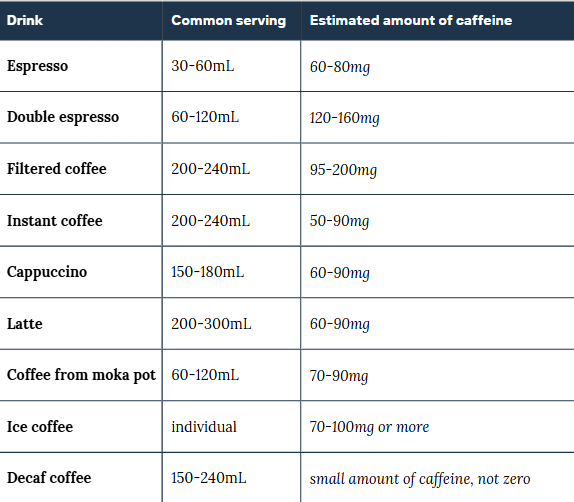
While a classic espresso can contain up to 80 mg of caffeine, filtered coffee can contain up to 200 mg. In practical terms, that means two large coffees in the morning can cover most of the recommended daily limit for some people. Those who combine coffee with energy drinks, cola, tea, or pre-workout supplements should be especially careful.
For the body, it is not just the number of coffees that matters, but also the timing and the reason for reaching for coffee. From a lifestyle perspective, it is useful to pay attention to these areas:
For that reason, it is not possible to say that there is one ideal amount of coffee for everyone. It is more sensible to watch your own body’s reaction, sleep quality, tension level, and whether coffee supports normal functioning or has started replacing rest.
Extra caution is advisable for pregnant women, people with significant anxiety, insomnia, palpitations, or a sensitive stomach. Caution is also appropriate for adolescents and for people who tend to use stimulants as a way of coping with exhaustion or psychological discomfort.
In practice, it is also worth paying attention when someone drinks coffee mainly to function after a bad night, skipping meals, or work overload. In that situation, the most important question is usually not “how much coffee is still okay,” but “what is happening in my routine that I stop functioning without it?”
Coffee can be a normal part of life for most healthy adults and may be associated more with benefits than risks. From a health perspective, however, the most important factor is usually not the coffee itself, but the context in which it is consumed.
When there is enough sleep, regular food, movement, and space for rest, coffee tends to be more of a supplement. When these basics are missing, it can easily become a crutch that helps only in the short term while masking the underlying problem.
I have been working in the field of addiction counselling for more than 10 years. I hold a bachelor’s degree in Addictology from the First Faculty of Medicine and a degree in General Medicine from the Second Faculty of Medicine, Charles University. In my research, I focus on preventive medicine and epidemiology.
In my work with clients, I combine evidence-based knowledge with a holistic approach to mental health. My medical background enables me to understand the broader clinical context and to better support each client’s individual needs.