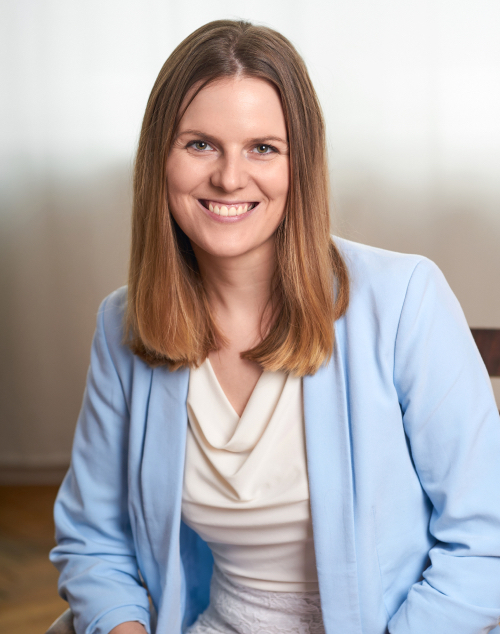


EUNOMA Clinic nutritionist Kateřina Kozáková was invited to the program (Ne)závislí on the web news portal FocusOn, where she shares her perspective on nutrition, addiction, and the pressure to perform in everyday life and in top sports. In the interview, she explains why rigid rules in eating often lead to eating disorders and how food addiction differs from alcohol or nicotine addiction.
In the interview, Kateřina describes how nutrition in the Czech Republic is still often reduced to a simple list of allowed and forbidden foods, which traps many people in a vicious circle of diets, overeating and guilt. Her goal is not for clients to be dependent on recommendations or strict rules, but for them to find a sustainable way of eating that respects their specific needs, lifestyle and psychological burden. According to her, the diet must adapt to the person – their activity, digestion, fatigue and level of stress – not the other way around.
Kateřina also discusses how food is related to addictive behavior. She explains that the combination of sugar and fat in ultra-processed foods activates the brain's reward center in a similar way to some addictive substances, as it leads to a release of dopamine and serotonin. However, the fundamental difference compared to other addictions is that food cannot be eliminated from our lives, and the goal is therefore not abstinence, but regulation and restoration of a balanced relationship with food.
A significant part of the conversation is devoted to the topic of nutrition in people in the treatment of alcohol or nicotine addiction. Energy and micronutrient deficiencies, disrupted metabolism, and sleep disorders are common, which can hinder recovery if not actively addressed. Kateřina describes that the great risk is replacing one addiction with another – typically overeating – and that the goal is not to ban sweets, but to consciously and controlledly include them in an overall stable diet.
As a nutrition therapist who works with the sports community, among other things, Kateřina also talks about specific risks for athletes. According to her, extreme diets, eliminating carbohydrates or overusing supplements are increasingly common among young athletes, which can lead to serious health and psychological problems. She describes simple carbohydrates as the basic "fuel" for sports performance and warns that the pursuit of absolute control of the body often ends in a loss of balance.
The interview also discusses how to recognize the line between a healthy interest in nutrition and pathological behavior. Warning signs include avoiding social situations because of food, strong anxiety in connection with "unplanned" eating, or a feeling of guilt after every deviation from the set rules. In the case of eating disorders such as anorexia or bulimia, Kateřina emphasizes the need to combine nutritional therapy, psychotherapy, and sometimes even pharmacological treatment in order to truly break out of the vicious circle.
In conclusion, Kateřina summarizes one of the biggest myths she encounters in her practice: according to her, nutrition is not divided into "good" and "bad", but into sustainable and unsustainable. The key is long-term stability, regularity and the ability to perceive your own body's signals - not the effort to find miracle foods or the next "perfect" diet.
You can watch the entire interview with Kateřina Kozáková on the program (Ne)závišlí on FocusOn as a video or podcast on the FocusOn website at the link.
If you are dealing with your relationship with food, overeating, weight loss, sports performance or nutrition in the context of addiction or mental illness, book a consultation with nutritional therapist Kateřina Kozáková. You can book an individual nutritional consultation via our online booking form, or contact us by email or phone.
I have been working in the field of addiction counselling for more than 10 years. I hold a bachelor’s degree in Addictology from the First Faculty of Medicine and a degree in General Medicine from the Second Faculty of Medicine, Charles University. In my research, I focus on preventive medicine and epidemiology.
In my work with clients, I combine evidence-based knowledge with a holistic approach to mental health. My medical background enables me to understand the broader clinical context and to better support each client’s individual needs.