

Articles

30.4.2026

Weight Loss After 40? It’s Possible—Without Extreme Diets or the Yo-Yo Effect!

Most of us change with age. And what used to work suddenly only brings fatigue and mood swings. We try just as hard as before, yet the weight simply won’t go down. So what are we doing wrong?

Unfortunately, even today, the internet is full of detoxes, weight-loss cures, and keto diets. But if you’re looking for a way out of the endless cycle of dieting, you likely won’t find the answer with your favorite influencer. That’s where we come in—nutrition therapists who guide you step by step toward proper eating habits without unnecessary restrictions or bans.

Why does the body “resist” after 40?

It’s not your fault that the number on the scale starts creeping up. As we age, we naturally lose muscle mass and go through significant hormonal changes. If we respond with strict dieting, the metabolism simply switches into energy-saving mode. The result? The yo-yo effect and a never-ending dieting cycle.

What are the 3 key pillars of weight loss?

  1. Individuality – Every person is different, with unique body composition, health conditions, stress levels, preferences, and financial possibilities. A nutrition therapist takes all of this into account. 
  1. Satiety and nutrients, not hunger – Weight loss without dieting means choosing foods with high nutritional density that provide all essential nutrients. When your body gets what it needs, evening cravings start to disappear.
  1. Mental well-being – Food is not your enemy. It accompanies you throughout your life, so it’s essential to build a healthy relationship with it—without banning your favorite meals or feeling guilty. The goal is sustainability, not short-term punishment.

2 steps you can take today

1. Protein in every meal

After 40, protein becomes your number one priority. Why? Because we naturally lose muscle mass with age, and muscles burn energy—even when you’re just sitting at your desk.

  • Keeps you full the longest: protein has the highest satiety effect of all nutrients

  • Regulates hunger (ghrelin) and fullness (leptin) hormones, helping prevent afternoon sugar cravings

  • Your body uses up to 30% of protein’s energy just to digest it

Where to get it? You don’t have to rely on chicken breast. Great options include Greek yogurt, skyr, eggs, fish, and plant-based sources like lentils, chickpeas, tempeh, or tofu.

Tip: Aim to include a palm-sized portion of protein in every main meal.

2. Replace “forbidden” with “added”

Most diets fail because they are built around the word “NO.” The human brain reacts to restriction with resistance and stronger cravings for the very foods you’re trying to avoid. Nutrition therapy takes a smarter approach—through volume and glycemic index.

  • The power of fiber: If you eat a dessert on an empty stomach, your blood sugar spikes and then crashes, leading to intense hunger. But if you eat that same dessert after a meal containing vegetables (fiber) and protein, the sugar is absorbed more slowly.
  • Mental relief: Instead of cutting out your favorite pasta, add double the portion of sautéed zucchini and a serving of tuna. Your plate will look large, keep you full for hours, and still remain calorie-friendly.
Goal: Learn to “build” meals with quality ingredients. The aim is not to eat less, but to eat more volume with better nutrition.

How do you recognize a true nutrition expert?

In a sea of nutrition advisors - many with only a weekend course - it’s easy to get lost. A nutrition therapist is a licensed healthcare professional with a university degree who helps you understand your body and set up a long-term, sustainable approach.

Remember, the journey to a healthier body is not about punishment or restriction. It’s about self-acceptance and understanding that your body deserves the best care—not starvation. It may not happen overnight, but a year from now, you’ll be grateful you didn’t take another shortcut that leads nowhere. Change your approach, and the results will follow.

Want to finally break free from the cycle of dieting and start losing weight in a way that truly works? Book a consultation with a nutritional therapist (dietitian) Kateřina Kozáková at EUNOMA Clinic. Together, you’ll create a personalized nutrition plan tailored to your body, lifestyle, and goals - without extremes or unnecessary restrictions. Schedule your appointment today and take the first step toward lasting change.
Read
29.4.2026

Modern Technology in Everyday Life: When It Helps and When It Starts to Harm

Modern technology is now a natural part of daily life. We use it to work, learn, stay in touch with loved ones, and relax. Technology itself is not the problem - what matters is the role it plays in our lives and what happens when it begins to replace sleep, relationships, focus, or time for ourselves.

At EUNOMA Clinic, we approach technology use without moralizing or unnecessary fear. The digital world is part of the reality we live in. That is precisely why it is important to recognize when technology is truly helpful, and when a seemingly harmless habit starts to become a burden on mental health, family life, or everyday functioning.

When Technology Use Is Still Healthy

A healthy relationship with technology does not mean using it as little as possible. It means keeping a sense of choice, perspective, and the ability to be offline without significant distress. Helpful habits include setting clear boundaries, balancing online and offline activities, and paying attention to how technology affects sleep, attention, and relationships.

If someone uses a phone, computer, or social media as a practical tool, high screen time alone is not necessarily a problem. It becomes more concerning when devices start functioning as an automatic escape from boredom, stress, uncertainty, or uncomfortable emotions.

Netolism: When the Online World Is No Longer Just a Tool

The term netolism refers to a non-substance addiction to the internet and its services. It can include the need to stay online constantly, repeatedly check a phone, spend long periods on social media, online games, video platforms, shopping, or other digital activities that gradually become difficult to control. This category also includes addiction on virtual relationships (dating apps) and virtual sexuality (pornography).

The issue is not just how many hours are spent on a phone or computer. What matters most are the consequences: neglecting responsibilities, weaker relationships, poor sleep, losing interest in former hobbies, or feeling that life does not work without the online world. Loss of control and disruption of everyday life are among the clearest signs that this is no longer just a habit.

Online Risks Are Not Only About Time

Technology-related concerns are not limited to digital addiction. The same area also includes other online risks that often appear in school and family prevention work: cyberbullyingcybergrooming, and sexting.

These phenomena share one important feature: they happen in a space that is fast, easily accessible, and often deeply personal. That is why they can be emotionally intense, especially for children and adolescents, and why it is important to talk about them clearly, calmly, and early.

Cyberbullying: Harm That Does Not End When the Bell Rings

Cyberbullying is deliberate harm carried out through digital technologies such as the internet, social media, email, or messaging apps. It may involve humiliation, insults, threats, shaming, or blackmail, and its impact is often amplified by the fact that it can reach a person repeatedly and almost anywhere.

Unlike traditional bullying, it does not stay in one place. It can follow someone home, into the evening, and into spaces that should feel safe. For that reason, online harm should be taken seriously and never dismissed as less real simply because it happens on a screen.

Cybergrooming: Manipulation That Can Look Harmless

Cybergrooming refers to dangerous manipulation in online settings, where an offender gains the trust of a child or adolescent and gradually exploits that trust. The person often uses a fake identity, communicates in a friendly way, and creates a sense of understanding or closeness before pushing for personal information, intimate content, or an in-person meeting.

What makes cybergrooming so serious is its subtle beginning. It does not usually start with a threat. It starts with attention. Not aggression, but warmth. That is why children and teens should know that discomfort, secrecy, or pressure to cross boundaries are always reasons to speak up and not face the situation alone.

Online Stalking: When Someone Keeps Following You in Digital Space

‍Online stalking refers to repeated and unwanted monitoring, contact, or harassment through digital channels. It may include frequent messages, tracking social media activity, threats, blackmail, or attempts to stay constantly present in someone’s life despite clear rejection. Unlike ordinary interest, online stalking is defined by pressure, boundary violations, and the feeling that there is no real escape from the harassment. In practice, it may occur on its own or together with cyberbullying and other forms of online abuse.

Sexting: Intimate Content in a Space Where Control Can Be Lost Easily

Sexting means sending messages, photos, videos, or other sexually explicit content. The risk is not only in sending it, but also in the fact that once content is shared, the sender no longer has full control over what happens to it next.

For both adolescents and adults, it is important to talk about consent, boundaries, safety, and consequences. Content intended for one person can become a tool for pressure, humiliation, or a part of other forms of online abuse, including cyberbullying or cybergrooming.

What Helps in Daily Life

Prevention starts with connection, not prohibition. For children and adolescents, curiosity, open communication, clear rules, and a safe space for sharing are essential. For adults, the key is conscious phone use, balancing online and offline time, and regularly noticing whether they are using technology - or whether technology is using them.

A few simple steps can help:

  • Notice why you reach for your phone - out of need or automatically.

  • If you are a parent, stay interested in who your child talks to online and which platforms they use.

  • Create screen-free times, such as before sleep or during shared family time.

  • Talk about the online world as openly as you talk about school, relationships, or emotions.

When to Seek Professional Support

Professional help is appropriate when technology use starts to significantly affect everyday functioning. This may include sleep problems, loss of control, neglect of school or work, withdrawal from usual interests, tension in the family, or ongoing distress connected to the online environment.

Support is also important when a child or adolescent experiences cyberbullying, uncomfortable manipulation, or pressure to share intimate content. Early action can often prevent deeper effects on mental health, relationships, and the sense of safety.

If you feel that technology use is beginning to affect your mental wellbeing, relationships, or daily functioning, you do not have to deal with it alone. At EUNOMA Clinic, this topic is addressed by addiction specialist Kristýna Březová and child psychologist Rút Jungwirthová, who offer a sensitive and professional space for adolescents, adults, and parents who want to better understand the situation and find a workable way forward. Reach out to us, and together we can look at what is happening in your life - without judgment, with respect, and with attention to real human needs.

Read
14.4.2026

Modern Eating Disorders: How to Recognize Them and When to Seek Help

Eating disorders are not limited to well-known diagnoses such as anorexia or bulimia. In recent years, we have also been seeing more of the newer forms and risk patterns of eating behavior, which may seem less obvious at first glance but are just as serious for both physical and mental health.

In adolescents or young adults, these issues often develop gradually. Parents or close relatives may notice changes in eating habits, body image, exercise, or alcohol use, but long interpret them as a phase, a “healthy lifestyle,” or ordinary teenage insecurity. Early recognition is therefore essential.

What modern eating disorders are

Terms such as drunkorexia, bigorexia, or orthorexia describe specific and often underestimated problems in the relationship with food, the body, and performance. These are not trendy labels or exaggerations, but real difficulties that can significantly affect health, family life, and psychological well-being.

A common thread is excessive control, anxiety related to food or the body, and a gradual narrowing of everyday life. A person may initially appear disciplined, “health-conscious,” or fitness-oriented, while in reality they may be under intense pressure and internal tension.

Drunkorexia

Drunkorexia refers to behavior in which a person skips meals or significantly restricts food intake in order to “save calories” for alcohol. It often appears in adolescents and young adults, especially in environments where drinking is tied to social pressure and, at the same time, to fear of weight gain.

At first glance, it may look like an occasional skipped meal before a party, but the issue is deeper. The combination of starvation and alcohol increases the risk of malnutrition, impaired concentration, injuries, blackouts, and the development of further risky behavior.

For close ones, warning signs may include a teenager or young adult repeatedly skipping dinner, returning from social events without eating, talking about “saving calories for alcohol,” or strongly compensating for social drinking by restricting food.

Bigorexia

Bigorexia is a disorder associated with an obsession with muscularity and the belief that the body is never big, strong, or defined enough. A person may spend many hours in the gym, obsessively control their diet, and still feel that their body does not meet the ideal.

This disorder is not limited to men, although it is often more visible in them. Typical features include constant comparison with others, dissatisfaction with one’s appearance, pressure to perform, and sometimes dangerous experimentation with supplements or other substances.

In practice, bigorexia can lead to exercise no longer being a healthy part of life and instead becoming compulsive behavior. A person may keep training despite exhaustion, injury, or illness because they fear they will “lose shape.”

Orthorexia and other forms

Orthorexia refers to a pathological obsession with “proper,” “clean,” or “perfect” nutrition. A healthy interest in food gradually turns into a strict system of prohibitions, fear of “impure” food, and significant restriction of social life.

A person with orthorexic tendencies may spend hours choosing food, checking ingredients, and planning meals. Outwardly, they may seem highly disciplined, but in reality they are often under strong pressure and inner anxiety.

Alongside orthorexia, we may also see other risky patterns, such as night eating or long-term irregular eating patterns in which little is eaten during the day and most energy intake shifts to the evening or night. These signs may also indicate that the relationship with food is out of balance.

Why these problems are dangerous

Eating disorders are not just a matter of willpower or “bad habits.” They are serious conditions that can affect physical health, mental state, and social functioning. In adolescents, they can also interfere with growth, hormonal development, concentration, and school performance.

Long-term restriction of food, binge eating with compensatory behaviors, excessive exercise, or intense fixation on the body can lead to malnutrition, fatigue, mood swings, sleep problems, anxiety, and worsening family relationships. In some cases, there is also a risk of addictive behavior or substance misuse.

The earlier the problem is identified, the better it can be addressed. Early help often means that it is not necessary to wait for a fully developed disorder, but intervention can begin already at the stage of warning signs.

What parents and loved ones should watch for

Warning signs include sudden changes in eating habits, skipping shared meals, rigid labeling of foods as “good” or “forbidden,” frequent comments about weight or body, and strong dissatisfaction with appearance. It may also be concerning if a child or adolescent begins to experience food or exercise as a source of stress rather than as a normal part of the day.

Another sign is excessive control, the need for everything to be precisely planned, or strong anxiety when the routine is disrupted. In some young people, isolation, irritability, secrecy, or worsening relationships at home may also appear.

It is important not to judge a single isolated behavior, but the overall pattern. One skipped lunch does not prove anything, but a repeated pattern of behavior may be a reason for professional assessment.

How to talk to an adolescent

If you are worried about your child or a close person, it is best to start with a calm and open conversation. It helps to speak about what you notice rather than criticize appearance or weight. Phrases like “I noticed that you often skip meals and seem stressed about it” are much more useful than blame.

It is also not helpful to dismiss the problem or hope that it will simply pass. In eating disorders, a timely and sensitive response from the family is often an important protective factor.

Likewise, trying to solve the situation through pressure, bans, or comments about appearance usually leads to more withdrawal rather than improvement.

How a nutrition therapist can help

A nutrition therapist/dietitian helps assess the eating pattern, distinguish common nutritional mistakes from risky behavior, and suggest a safe and realistic plan. In adolescents, it is especially important to work sensitively, without pressure and with respect for the psychological situation and family context.

The care does not focus only on “what to eat,” but also on how to rebuild a relationship with food that is not based on fear, restriction, or extremes. In case of eating disorders, nutritional care is connected with psychological, psychiatric, and addiction support, as needed, because eating disorders usually affect several areas at once.

Early consultation can also be very helpful when there is not yet a fully developed disorder. In many cases, it is enough to identify a risky trend, adjust the routine, and prevent the problem from worsening further.

When to seek an appointment

Professional assessment is appropriate if you notice repeated food restriction, rapid weight changes, fear of ordinary foods, compulsive exercise, compensatory behaviors after eating, or significant stress related to body and eating.

It also makes sense to book a consultation if the issue begins to affect family relationships, school, sport, or overall mental well-being. With adolescents, it is better to respond earlier rather than later.

Consultation at EUNOMA Clinic

At EUNOMA Clinic, we approach eating disorders in a comprehensive way, taking age, family situation, and mental health into account. During a consultation with our nutrition therapist, we focus on what is safe, sustainable, and truly helpful in restoring a healthier relationship with food.

If you are worried about your child, partner, or another close person, you do not have to wait until the situation gets worse. Timely professional support can be the first step toward improvement.

If you feel that yours or your loved one’s relationship with food, body image, or exercise is starting to worsen, book a consultation with a nutrition therapist  Kateřina Kozáková at EUNOMA Clinic.

Read
12.4.2026

EUNOMA Clinic at internal medicine conference in Olomouc: alcohol, nutrition and brief intervention

In March 2026, the EUNOMA Clinic team participated in the Congress of Internal Medicine for Practice in Olomouc, where our professional presentations were presented to doctors from all over the Czech Republic.

The congress was attended by MUDr. Bc. Jana Malinovská, Ph.D., Bc. Kateřina Kozáková and Mgr. Kristýna Březová. Our panel focused on topics that affect many patients in everyday practice: alcohol and smoking, nutrition as a neglected factor in relapse, and brief intervention for risky substance use.

What was discussed

Jana Malinovská presented the current perspective on the health risks of alcohol and nicotine products and emphasized that in addiction treatment, it is important to abandon the notion of a “safe dose” of alcohol. She also introduced the concept of lifestyle medicine, highlighting the connection between addiction treatment and movement, sleep, and nutrition.

Kateřina Kozáková focused on nutrition as an important but often overlooked factor in relapse. She reminded the audience that nutritional status, blood sugar stability, managing cravings, and concerns about weight gain can all play a significant role for people in addiction treatment.

Kristýna Březová presented brief intervention as a practical tool that can help physicians identify risky alcohol and tobacco use early. This type of sensitive, concise, and clear conversation can be highly effective in a clinical setting.

Why it is important

We believe that mental health care should always be understandable, sensitive and evidence-based. It is the connection of medicine, addiction, nutrition and prevention that makes sense to us and helps us bring useful and practical information to patients and colleagues in practice.

Participation in the congress was not only a professional opportunity for us, but also confirmation that there is increasing interest in topics such as alcohol and health, smoking, brief intervention, and nutrition in clinical practice.

If you’re looking for professional and individualized support - whether in the area of mental health, nutrition, or gaining control over substance use - explore the services of EUNOMA Clinic or schedule a consultation in person in Prague 2 or online through our booking form.

Read
1.3.2026

Food, psyche and addictions: a nutritional therapist on the relationship to the body, performance and regeneration

EUNOMA Clinic nutritionist Kateřina Kozáková was invited to the program (Ne)závislí on the web news portal FocusOn, where she shares her perspective on nutrition, addiction, and the pressure to perform in everyday life and in top sports. In the interview, she explains why rigid rules in eating often lead to eating disorders and how food addiction differs from alcohol or nicotine addiction.

Nutrition is not a list of forbidden foods

In the interview, Kateřina describes how nutrition in the Czech Republic is still often reduced to a simple list of allowed and forbidden foods, which traps many people in a vicious circle of diets, overeating and guilt. Her goal is not for clients to be dependent on recommendations or strict rules, but for them to find a sustainable way of eating that respects their specific needs, lifestyle and psychological burden. According to her, the diet must adapt to the person – their activity, digestion, fatigue and level of stress – not the other way around.

Food, dopamine and addictions

Kateřina also discusses how food is related to addictive behavior. She explains that the combination of sugar and fat in ultra-processed foods activates the brain's reward center in a similar way to some addictive substances, as it leads to a release of dopamine and serotonin. However, the fundamental difference compared to other addictions is that food cannot be eliminated from our lives, and the goal is therefore not abstinence, but regulation and restoration of a balanced relationship with food.

Nutrition during withdrawal and the risk of “nutritional replacement” addiction

A significant part of the conversation is devoted to the topic of nutrition in people in the treatment of alcohol or nicotine addiction. Energy and micronutrient deficiencies, disrupted metabolism, and sleep disorders are common, which can hinder recovery if not actively addressed. Kateřina describes that the great risk is replacing one addiction with another – typically overeating – and that the goal is not to ban sweets, but to consciously and controlledly include them in an overall stable diet.

Athletes, performance and dangerous shortcuts

As a nutrition therapist who works with the sports community, among other things, Kateřina also talks about specific risks for athletes. According to her, extreme diets, eliminating carbohydrates or overusing supplements are increasingly common among young athletes, which can lead to serious health and psychological problems. She describes simple carbohydrates as the basic "fuel" for sports performance and warns that the pursuit of absolute control of the body often ends in a loss of balance.

Where care ends and obsession begins

The interview also discusses how to recognize the line between a healthy interest in nutrition and pathological behavior. Warning signs include avoiding social situations because of food, strong anxiety in connection with "unplanned" eating, or a feeling of guilt after every deviation from the set rules. In the case of eating disorders such as anorexia or bulimia, Kateřina emphasizes the need to combine nutritional therapy, psychotherapy, and sometimes even pharmacological treatment in order to truly break out of the vicious circle.

"Nutrition is not divided into good and bad"

In conclusion, Kateřina summarizes one of the biggest myths she encounters in her practice: according to her, nutrition is not divided into "good" and "bad", but into sustainable and unsustainable. The key is long-term stability, regularity and the ability to perceive your own body's signals - not the effort to find miracle foods or the next "perfect" diet.

Listen to the full interview

You can watch the entire interview with Kateřina Kozáková on the program (Ne)závišlí on FocusOn as a video or podcast on the FocusOn website at the link .

Do you want to support your relationship with food?

If you are dealing with your relationship with food, overeating, weight loss, sports performance or nutrition in the context of addiction or mental illness, book a consultation with nutritional therapist Kateřina Kozáková. You can book an individual nutritional consultation via our online booking form, or contact us by email or phone.

Read
23.2.2026

Does my child have a digital addiction?

Most families today struggle with the question of how much time is “normal” to spend on a phone or tablet. A child who reaches for a device as soon as they wake up in the morning, stays up all night watching TikTok, and fights over putting down the phone are common, are not the exception. But the question is: is this just part of growing up in the digital age, or is it risky behavior that needs attention?

Digital technologies have their advantages – they make it easier to learn, communicate with friends and access information. The problem arises when they become a daily “escape” from reality, stress or boredom. The algorithms of social networks and games are designed to keep us there as long as possible thanks to random rewards and act like an addictive substance.

How to know when it's time to act? Here are 7 warning signs:

  • Poor performance at school for no other reason.
  • Sleep problems (staying up late, difficulty falling asleep due to light from screens).
  • Irritability, aggression, or anxiety when the child cannot use the device.
  • Neglecting responsibilities, clubs, or personal hygiene due to online time.
  • Impulsivity and loss of control (“just a moment” stretches into hours).
  • Withdrawal from real-life relationships – the child spends more time online than with family or friends.
  • Reduced movement, back, head or eye pain.

A simple test for you: For 2-3 days, write down how much time your child (and you) spends on screens. Compare your estimate with reality – it often surprises us. Ask: “What do you use your phone for most? Can you be offline for an hour without stress?”

If you notice a combination of warning signs or feel that things are getting out of control, don’t wait to take action. At EUNOMA Clinic, Mgr. Kristýna Březová offers addiction counseling to help assess the situation, identify underlying causes, and create a clear plan for setting healthy boundaries around digital technology use.

Seeking help is not a failure – it is a responsibility.

Schedule a consultation online or writedirectly  to brezova.kristyna@seznam.cz to arrange a consultation with addiction specialist Kristýna Březová.

Read
15.9.2025

The impact of addiction on the family

Addiction is not a problem solely of the individual — it often affects their entire family, partner, and close circle. Understanding how addiction impacts the family system is crucial for better managing the situation and finding paths to recovery for both the addicted person and their loved ones.

How addiction affects family

When someone in the family becomes addicted (to alcohol, drugs, gambling), their behavior and priorities often change. The addict may withdraw into themselves, lose interest in shared activities, and neglect responsibilities. Arguments, distrust, insecurity, or financial problems often arise. Other family members try to solve the situation, sometimes to the point of taking responsibility for the addict.

What is codependency?

Codependency is a term that describes a condition in which one or more family members begin to unconsciously adapt their behavior to the addicted individual. They try to protect them from the consequences of their actions, make excuses for them, hide the truth from others, or solve their problems for them. The codependent person can become very exhausted, lose themselves, and their life begins to revolve mainly around the needs of the addict. Unfortunately, this allows the addict to continue their destructive behavior because they do not have to fully face the consequences of their actions.

Common manifestations of codependency

  • Constantly defending and apologizing to the addict
  • Tendency to take on all household responsibilities
  • Fear of raising a problem or asking for help
  • Suppression of one's own needs and feelings

How to strengthen the family and help the addict

A very important step is to admit that there is a problem with addiction in the family and to take seriously how the slide into codependency affects all members of the household. It is important to learn to say "no", set healthy boundaries and take care of yourself. Do not be afraid to seek help from professionals, such as an addiction specialist or a family or couples therapist. Support and education of loved ones are often key to successful addiction treatment and maintaining a healthy family environment.

In conclusion

Every family member deserves the right to personal wellbeing and a life free from the impact of another person’s addiction. Change can be challenging, but with the right support and understanding, it’s possible to overcome times of crisis and move toward healthier family relationships.

If you or someone close to you is going through a similar situation, you don’t have to face it alone. Our clinic offers support focused on strengthening family systems and working with loved ones. This area is led by addictologist Ing. Bc. Michaela Jelínková. You can schedule an addiction counselling easily through our online booking form.

Read
2.7.2026

Sleeping Pills and Natural Remedies: What Has Scientific Evidence and When Caution Is Needed

Sleep difficulties are among common complaints, but their management should not be based solely on quick relief in the form of a pill. For insomnia, it is important to distinguish between short-term help and long-term solutions, as this fundamentally affects both safety and the overall effect of treatment. Current recommendations emphasize that for chronic insomnia, the foundation should primarily be a non-pharmacological approach, especially cognitive-behavioral therapy, while pharmacotherapy should play more of a supportive and often time-limited role.

Sleeping pills can be useful in some situations, for example during temporary worsening of sleep or during periods of significant acute stress. At the same time, it is important to say that many hypnotics can be associated with the risk of daytime drowsiness, impaired attention, memory problems, rebound insomnia after discontinuation, tolerance, and in some groups also with addiction potential. This is precisely why they need to be used only according to a doctor's recommendation, not to exceed the prescribed dose, and to always carefully read the patient information leaflet.

Why Sleeping Pills Are Usually Only a Short-Term Solution

For classic sleeping pills, only short-term use is recommended, often in the range of 2 to 4 weeks, especially for benzodiazepines and hypnotics. The reason is not only the risk of habituation and dependence, but also the possibility of developing tolerance, worsening sleep after discontinuation, and the fact that the medication itself usually does not address the causes that maintain insomnia long-term.

Sleeping pills are not suitable as an automatic long-term solution, and it is safer to view them as short-term support during a precisely defined period.

Which Medications Require Extra Caution

Special caution is warranted with benzodiazepines (e.g., cinolazepam (Gerodorm), bromazepam (Lexaurin), clonazepam (Rivotril), alprazolam (Neurol, Xanax)) and so-called Z-hypnotics, i.e., medications that act via the benzodiazepine receptor (such as zolpidem (Hypnogen, Stilnox, Adorma, Zolpinox, Sanval, Onirex, ...), zopiclone (Zopitin), eszopiclone (Esogno)).

It is precisely in these groups that the risk of tolerance, withdrawal problems, memory impairment, residual morning drowsiness (sedation), and in some patients the development of dependence is described, especially with prolonged use, higher doses, or when combined with alcohol and other depressant substances.

What Is Important When Taking Hypnotics

When taking sleeping pills, it is advisable to follow several basic rules that reduce the risk of complications and support a safer course of treatment.

  • Take the medication only as recommended by your doctor.
  • Do not exceed the prescribed dose or use the product more frequently than recommended.
  • Expect that this is usually a short-term solution, typically up to 4 weeks.
  • Do not combine hypnotics with alcohol or other depressant substances without medical advice.
  • Always read the patient information leaflet, including warnings about interactions, drowsiness, and driving restrictions.
  • When discontinuing after prolonged use, do not stop the medication abruptly without consulting a specialist.

Natural Remedies with Scientific Evidence

For natural remedies, it is important to take a sober and scientifically grounded approach. Not every substance that is popular on social media or commonly available in pharmacies truly has convincing support from study data.

Melatonin

Melatonin is among the most frequently studied substances in relation to sleep, and its role is relatively well-documented in the professional literature. It makes the most sense for circadian rhythm disorders and some sleep-onset difficulties, but it is not appropriate to present it as a universal solution for every type of insomnia. For chronic insomnia, recommendations are not as clear-cut as they might initially appear.

Valerian Root

Valerian root, i.e., Valeriana officinalis, is among the most frequently studied herbal substances for sleep support. There are clinical studies and review papers that support its use for improving sleep quality, although results are not uniform in all cases. Nevertheless, it is one of the few natural substances where benefits for sleep can be said to be supported by scientific data. Within studies, it was reported that people fell asleep faster (15-20 minutes earlier) and slept longer (30-40 minutes longer). Without rebound effect, i.e., after discontinuation, sleep did not worsen. In studies, dosing was 1 capsule of 400-900 mg taken 30–60 minutes before bedtime.

Ashwagandha

Ashwagandha, i.e., Withania somnifera, has been studied more frequently in recent years, particularly in relation to stress and subjective sleep quality. Some clinical studies suggest possible benefits, but current evidence is still not strong enough for it to be considered standard insomnia treatment. Within studies, after 8–12 weeks of use, people experienced deeper sleep, woke up less frequently during the night, and had reduced nighttime levels of stress hormones (cortisol). Ashwagandha may help in cases where stress prevents falling asleep.

Lavender and Other Herbal Substances

For lavender, lemon balm, passionflower, or chamomile, professional publications can also be found, but the strength of evidence is usually limited, and results are not always consistent. Lavender may help with sleep if you are simultaneously experiencing anxiety or nervousness. In studies, for example, lavender tea before bedtime over 4 weeks improved sleep quality and reduced anxiety. Capsules with lavender extract (80 mg) are also available, which should be taken half an hour to an hour before bedtime.

Which Option to Choose

When experiencing sleep difficulties, it is understandable to seek quick help, but long-term, the most effective approach is one that combines lifestyle measures, work on the underlying causes of insomnia, and only as needed, carefully selected short-term support. Sleeping pills can help in some situations but should not become a permanent nightly reliance.

Natural remedies can have their place if we choose wisely and stick to substances supported by professional literature. However, even here, "natural" does not automatically mean safe for everyone, as even over-the-counter preparations can have side effects, interactions, or restrictions for certain patient groups.

If sleep problems recur, worsen, or lead to daytime exhaustion, it makes sense to seek their true cause in a broader context. At EUNOMA Clinic, we view sleep comprehensively - in connection with stress, mental health, lifestyle, and overall health status.

This text serves as a basic overview and does not replace individual medical advice. The appropriateness of medications, dietary supplements, and their combinations should always be decided with consideration of the specific health condition, other medications, and the type of sleep difficulties.

Read
28.6.2026

How to Improve Sleep: Lifestyle Measures for Better Rest

Quality sleep doesn’t begin the moment you lie down in bed. It starts much earlier - during the day, in how you manage your energy, light exposure, movement, food, stress, and your evening pace. Sleep is highly sensitive to regularity, and a consistently disrupted routine can gradually weaken the natural signals that tell your body when to be active and when to rest.

The good news is that lifestyle measures are among the most important and accessible steps anyone can take to improve sleep. This isn’t about quick fixes, but about gradually creating conditions in which sleep can naturally return to balance.

Maintain a Regular Sleep Rhythm

One of the most important factors is keeping a consistent bedtime and wake-up time. Your body operates according to an internal biological clock that stabilizes best when it receives predictable signals. Going to bed and waking up at different times each day can easily throw your sleep rhythm off balance.

It helps to keep roughly the same morning wake-up time, even on weekends. Sleeping in significantly or shifting bedtime dramatically often leads to difficulty falling asleep at night and harder mornings. For some people, limiting excessive time in bed can also be helpful, as it can paradoxically worsen sleep quality.

Evening Wind-Down

One to two hours before bed, it’s beneficial to transition into a calmer mode. Both body and mind need time to shift from daytime activity to rest. A regular evening ritual can help—such as a bath or shower, reading, quiet music or podcast listening, brief relaxation, or simply slowing the day’s pace.

It’s important that the evening isn’t filled with demanding tasks, conflicts, or activities like answering difficult work emails, intense workouts, or gaming on a computer or console. Many people underestimate this part of the day, yet evening wind-down often determines how easily someone falls asleep. A repeated, simple ritual can serve as a clear signal to the brain that sleep is approaching.

Bedroom and Sleep Environment

The environment in which sleep takes place significantly affects its quality. The bedroom should be as quiet, dark, well-ventilated, and temperature-comfortable as possible (cooler temperatures are generally better). Excessive heat, noise, light, or disruptive stimuli can disturb not only falling asleep but also the overall quality of sleep. It’s advisable to avoid flowers and other indoor plants in the bedroom.

The bed should be associated primarily with sleep and intimacy. If you bring work, your phone, laptop, or TV into the bedroom, your brain starts associating the room with activity rather than rest. Clearly separating the bedroom from work and active spaces can be very helpful.

Screens and Evening Light

Evening light, especially from screens, can disrupt the natural onset of sleepiness. Therefore, it’s advisable to limit the use of phones, computers, or TVs at least one hour before bed - ideally even earlier. It’s not just the light itself, but also the mental stimulation that screens provide.

Conversely, daylight during the day is crucial for sleep. Time spent outdoors helps set your biological clock and supports the proper alternation of wakefulness and sleepiness. Even a short walk in the morning or during the day can have a surprisingly positive effect on sleep.

Food, Drink, and Stimulants

Sleep is also sensitive to when and what you eat. In the evening, it’s best not to go to bed with a very full stomach, but also not completely hungry. A light dinner with sufficient time before bedtime is usually better than a heavy or very late meal.

It’s also important to limit caffeine in the second half of the day. Caffeine isn’t only in coffee - it’s also found in tea, cola drinks, energy drinks, and other products. Alcohol may create a subjective feeling of sleepiness, but it often worsens sleep quality and continuity.

Movement During the Day

Regular physical activity is highly beneficial for sleep. It doesn’t have to be intense sport; often brisk walking, regular physical activity, or time spent outdoors is enough. Movement helps regulate stress, supports natural fatigue, and improves sleep pressure.

Timing is more important than intensity. Strenuous physical activity right before bed may not be suitable, as it can activate the body instead of relaxing it. Ideally, schedule movement during the day or earlier in the evening.

When You Can’t Fall Asleep

If you’re lying in bed for an extended period without sleep, it often leads to increased tension. In such situations, it can be helpful to get up for a while, move to another quiet room, and do something undemanding until sleepiness returns. This strengthens the association of the bed with sleep, not with frustration and wakefulness.

Equally important is not to pressure yourself. Sleep cannot be forced, and the effort to “fall asleep right now” often paradoxically increases alertness. It’s far more useful to create conditions in which sleep can naturally occur.

When to Look for Further Causes

If sleep difficulties persist long-term or worsen, it’s worth looking for additional underlying factors. Sometimes the cause lies in stress, psychological overload, an irregular daily rhythm, or a health issue that deserves professional evaluation. Lifestyle measures are very important, but they aren’t always the only step a person needs.

At EUNOMA Clinic, we approach sleep comprehensively and with respect for the fact that every person has a different story and different needs. That’s why it makes sense to start with the basics - routine, environment, and daily habits - and only then consider additional care options if needed.

Quality sleep isn’t a matter of a single tip or quick trick. It’s the result of daily habits, regularity, and an environment that allows the body to switch into rest mode. Lifestyle measures are a simple but very powerful foundation on which further sleep care can be built.

Read
5.6.2026

Longevity Is Not About a Pill: What Does Science Really Show Helps Us Live Longer and Healthier?

When longevity is discussed today, attention often turns to dietary supplements, “anti-aging” trends, or biohacking. Scientific evidence, however, paints a much more down-to-earth—and at the same time more practical—picture: the greatest influence on both the length and quality of life does not come from one miraculous substance, but from a combination of everyday habits that support the body and mind over the long term.

This does not mean that genetics or access to quality healthcare are unimportant. It does mean, however, that in most cases it makes the greatest sense to focus on areas we can genuinely influence: diet, physical activity, sleep, stress management, relationships, mental well-being, and reducing risky substance use.

A balanced lifestyle has a greater impact than miracle solutions

Longevity marketing often creates the impression that healthy aging can be “bought” in a tablet or powder. Yet the most convincing data repeatedly show that a lower risk of premature death is associated primarily with regular physical activity, a high-quality diet, less time spent sitting, good mental health, and strong social connections.

In other words, longevity is not the result of a one-time action, but of repeated small decisions. That is precisely why sustainable changes to our daily routine and lifestyle are more important than chasing expensive and often overhyped dietary supplements.

1. Diet: consistency and quality over extremes

One of the dietary patterns with the strongest evidence for supporting healthy aging is the Mediterranean-style diet. It is based primarily on vegetables, fruit, legumes, whole grains, nuts, seeds, and healthy fats—especially olive oil—while ultra-processed foods, sweets, and excessive amounts of red meat play a less prominent role.

In a large long-term study involving more than 25,000 people, greater adherence to the Mediterranean diet was associated with up to a 23% lower risk of death from all causes. The benefits were particularly related to cardiovascular health and the risk of cancer—areas that have a major impact on life expectancy.

In practice, it is useful to focus on several simple principles:

  • Choose whole foods instead of highly processed products.
  • Include vegetables, fruit, legumes, and whole-grain foods in your diet regularly.
  • Make sure you get enough protein and healthy fats.
  • Limit added sugar and excessive salt.
  • Eat moderately and avoid overeating.

Dietary supplements certainly have their place, but they should be selected according to an individual’s needs—for example, in cases of a confirmed deficiency or a specific health requirement. As the main strategy for longevity, however, they are not as consistently effective as a high-quality and regular eating pattern.

2. Physical activity: even small changes count

The good news is that you do not need to start radically in order to improve your health. The World Health Organization generally recommends that adults engage in at least 150 minutes of moderate-intensity physical activity per week, or 75 minutes of vigorous-intensity activity, while also incorporating muscle-strengthening exercises. At the same time, an even more important principle applies: every movement counts, and any movement is better than none.

This is especially important for people who feel they “do not have time to exercise properly.” You do not need to start by running a half-marathon or spending hours at the gym. Brisk walking, taking the stairs instead of the lift, going for a short walk after a meal, or walking to a meeting can all make a meaningful difference.

Insufficient physical activity increases the risk of death by approximately 20–30% compared with being physically active. Regular physical activity, on the other hand, is associated with a lower risk of death, cardiovascular disease, type 2 diabetes, and certain cancers, as well as with better sleep and psychological well-being.

One of the most effective strategies for supporting longevity is to reduce long, uninterrupted periods of sitting. More time spent sitting, or a sedentary lifestyle, is associated with a higher risk of death in adults. For this reason, sedentary time should be limited as much as possible. During a typical working day, it may therefore be helpful to:

  • Stand up every 30–60 minutes.
  • Take a short walk.
  • Make phone calls while standing.
  • Do part of your work at a standing desk or another raised surface.

These are not insignificant gestures. They are realistic steps that can help reduce the overall burden of a sedentary lifestyle.

For many people, the best approach is to begin with a genuinely small change, such as:

  • Adding 10 minutes of walking each day.
  • Stretching briefly between meetings.
  • Standing while making phone calls or replying to emails.
  • Doing simple strength exercises at home twice a week.

Small steps are often more sustainable than a perfect plan that lasts only one week. When it comes to longevity, consistency is more valuable than occasional bursts of effort.

3. Stress management: not a luxury, but prevention

Stress is a normal part of life and is not automatically harmful in itself. Problems arise when stress becomes long-term, is not accompanied by sufficient recovery, and begins to affect sleep, mood, relationships, the immune system, and physical health.

Chronic stress can worsen existing health problems and increase the tendency to rely on unhealthy coping strategies, such as increased alcohol or other substance use. Conversely, working with stress and learning to manage it on a daily basis can help prevent acute strain from developing into a chronic problem.

You can start with these simple steps:

  • Practise a brief breathing exercise or meditate for a few minutes each day.
  • Spend time outdoors and stay physically active.
  • Limit the amount of time spent on social media and on your phone.
  • Keep a journal, consciously slow down, or spend some time in silence without external stimuli or screens.

The goal is not to live without stress. The goal is to have enough tools to process stress continuously and prevent it from becoming a long-term burden on the body.

4. Social connections: an underestimated protective factor

Quality relationships are not merely a pleasant way to spend time. Current evidence shows that social isolation and loneliness are associated with a higher risk of premature death.

A meta-analysis of 90 studies involving more than 2 million adults found that social isolation was associated with a 32% increase in the risk of death, while loneliness was associated with a 14% increase. Social isolation was also associated with a higher risk of death from cardiovascular disease.

For this reason, caring for your social life is also important for longevity. You might try to:

  • Maintain regular contact with people who are close to you or whose company makes you feel good.
  • Actively nurture meaningful relationships with people you feel able to talk to openly.
  • Take part in communities, group activities, or support programmes.

5. Mental well-being and sleep: a foundation, not an extra

Mental health is much more closely connected to longevity than is often acknowledged. When a person is chronically overwhelmed, anxious, depressed, or exhausted, this usually affects not only their subjective experience, but also their sleep, emotional balance, energy, immune system, motivation to exercise, and eating habits.

Adults need at least seven hours of sleep per day, and it is helpful to go to bed and wake up at approximately the same time each day. Sufficient sleep is part of caring for both body and mind, and it fits within the same framework of preventive measures that support longevity through a healthy lifestyle.

Mental health care is an integral part of this process. Seeking help with psychological difficulties is not a sign of weakness, but a form of prevention. Caring for your mental health can be one of the most important steps towards maintaining a good quality of life in the long term.

6. Risky substance use: an issue that cannot be overlooked

When discussing longevity, it is essential to include addictive substances and their impact on aging. Smoking, vaping, risky alcohol use, illicit drugs, and the misuse of medication are all factors that place a long-term burden on health and can shorten life.

The basic recommendations are not to smoke, not to vape, avoid illicit drugs, and never use medication in ways other than prescribed. With alcohol, the recommendation is either not to drink at all or to drink moderately—approximately a maximum of 100–200 ml of wine or one to two small beers, with at least two alcohol-free days per week. When experiencing stress or psychological difficulties, it is advisable to avoid alcohol completely, as alcohol is often used as a form of “self-medication” but tends to worsen problems in the long term.

The problem does not begin only when addiction develops. Addiction develops gradually, and it is important to identify risky patterns of use—or the factors that lead, or may lead, to a loss of control—at an early stage. This can help prevent alcohol, smoking, or other substances from becoming a routine part of functioning, coping with stress, or falling asleep.

By preventing and monitoring behavioural patterns, it is possible to identify a problem before it fully develops and, as a result, make it easier to regain control.

Conclusion

The most reliable path to a longer and healthier life is not hidden in a single pill. It lies in a balanced diet, regular physical activity, reducing prolonged sitting, quality sleep, stress management, meaningful relationships, and addressing risky substance use at an early stage.

And perhaps the most important point is this: you do not have to start perfectly. From the perspective of health and longevity, even a small change can make a difference if it becomes part of everyday life over the long term.

Small changes can have a major impact. Start today and book a consultation at EUNOMA Clinic if you would like to support your health and longevity in a long-term, scientifically grounded way.

Read
16.5.2026

Healthy Use of Digital Technologies in Children: Practical Tips for Parents

Digital technologies, such as mobile phones and tablets, are now a common part of children’s everyday lives. They offer many benefits, but also carry certain risks. The key question is therefore not whether children should use technology, but how to use it in a healthy and safe way. So how can we support healthy technology use in children while also protecting their mental well-being?

How to integrate technology into a child’s life in a healthy way

Parents play a crucial role in shaping their children’s digital habits. It is important to find ways to incorporate technology meaningfully into a child’s life. Rather than relying on strict bans, it is more effective to guide children toward purposeful use. Well-chosen apps, educational games, and online courses can support cognitive development, curiosity, and learning. Technology should not be just passive entertainment, but a tool for growth.

What to watch out for: Risks of digital technologies

Parents should pay attention to possible signs of digital addiction or negative effects of technology use. Warning signs may include:

  • mood changes and signs of depression
  • escape from reality and social isolation
  • increased aggression
  • experience with cyberbullying

Early recognition of these signs can help prevent more serious mental health issues.

Screen-free time strengthens relationships

Healthy technology use is based on clear rules and open communication. Establishing regular screen-free time is one of the most effective steps. This can include shared meals, weekend activities, or a calm evening routine before bedtime. These moments support communication, relationships, and the ability to be fully present and disconnect from the online world.

Open communication about technology

Dialogue is an essential part of prevention. Talk to children about how their peers use technology and what they themselves experience online. Discuss both the benefits and risks of the digital world openly, without fear-based messaging, but with an emphasis on understanding and critical thinking. Trust and a safe environment where children feel comfortable sharing their experiences are key.

Parents as role models in technology use

Parents should remember that they are role models, and children learn through imitation. The way parents use their phones or tablets is naturally mirrored by their children. If parents spend a lot of time on screens, children are likely to adopt the same behavior. Conscious and moderate use of technology by parents is essential for building healthy habits.

Alternatives to screens: Supporting healthy child development

It is equally important to offer children a variety of offline activities as a preventive measure against digital addiction. Helpful options include:

  • hobbies and sports
  • creative activities
  • time spent outdoors
  • simple household responsibilities

These activities support independence, responsibility, and naturally reduce time spent on screens. If problematic use has already developed, it may be challenging to reduce screen time, but every small step contributes to building healthier habits over time.

How to set healthy boundaries for technology use

A healthy relationship with digital technology is not created through prohibition, but through balance. Prevention from an early age, clearly defined rules, open communication, and active parental involvement help children learn to use technology safely and meaningfully.

EUNOMA Clinic supports parents and children

If you are concerned about the impact of technology on your child’s mental health or notice signs of digital addiction, specialists at EUNOMA Clinic are here to help. We offer psychological and addiction counseling for children and parents, as well as support in addressing challenges related to the digital world. If you are unsure where to turn, feel free to contact us - we will be happy to guide you.

Read
9.4.2026

How to talk to your child about their mobile phone without arguing: 10 steps

Does your child spend most of their time on the phone, argue or respond irritably - or even with shouting - when asked to put it down, sleep poorly, or postpone schoolwork because of time spent on a phone or tablet?

Excessive use of phones or tablets among children has become a common concern for many parents, especially when irritability and restlessness appear when the device is taken away, or when attention, interest in other activities, and family harmony start to decline. In such situations, timely support, sensitive rule‑setting, and a joint search for balance between the online and offline world can make a real difference.

At EUNOMA Clinic, we often meet parents who are looking for ways to ease the tension around rules for mobile phone or tablet use. Our goal is not to forbid technology, but to help families find a healthier balance, understand what their child is seeking in the online world, and set meaningful boundaries together. A sensitive yet practical approach is often the first step toward positive change.

As a first step towards talking with your child without arguments, these ten tips may help:

1. Make time for the conversation

‍Avoid talking in the middle of an argument or strong emotions; instead, choose a quiet moment that feels safe for both of you.

2. Sit at your child's level

Sit so that your head is at the same level as the child to promote a sense of equality during the conversation. This will prevent the child from feeling that you are "superior" .

3. Ask how your child feels and what they need

 Try questions like: “How do you feel when I limit your phone time? What do you miss most about it?” Understand the child’s motivation and emotions connected to their phone or tablet, and the meaning technology holds in their world.

4. Nekritizujte, nehodnoťte

Aim to understand your child’s online world and what their phone represents for them. Keep an open mind and refrain from judging or evaluating.

5. Explain your perspective and feelings

Share your concerns or fears openly, using concrete examples from daily life.

6. Be honest, according to your child's age

Speak truthfully about risks and describe what changes you’ve noticed, in a way that’s age‑appropriate and not frightening.

7. Look for compromise

Avoid imposing strict bans; instead, work toward a joint agreement through open discussion. Restrictions alone are rarely effective.

8. Pravidla na míru

Set phone or tablet rules individually for each child, and don’t hesitate to adjust them as your child grows.

9. Repeat the agreement

Summarize out loud what you both agreed on and let your child confirm it verbally.

10. Pozastavte rozhovor, pokud to vře

If you feel the discussion is spiraling or getting out of control, postpone it. It’s better to take a break than to let emotions escalate.

A common mistake is reacting emotionally by imposing strict bans—or constantly being on the phone yourself. Children often see this as unfair. If conflicts persist and the rules don’t seem to work, reach out to a specialist for support. At EUNOMA Clinic, Mgr. Kristýna Březová helps families set healthy boundaries and manage emotions around technology through addiction counseling.
Schedule a consultation on-line via our booking page.

Read
7.3.2026

Does your child have a stomach ache before school? When is it a sign of anxiety and stress?

A child wakes up in the morning with a stomachache, refuses breakfast and doesn't want to go to school. The doctor finds nothing, but the problem returns. In younger schoolchildren, it often doesn't have to be a physical illness, but anxiety and school stress that manifest themselves physically.

How to know it's a mental issue and not an illness

Anxiety in children aged 6-11 is most often hidden behind somatic symptoms: abdominal pain, headaches, nausea, diarrhea or morning vomiting - often just before going to school. The child may be irritable, cling to you more than usual, have nightmares or avoid peers. These signals indicate that the nervous system is overloaded by schoolwork, bullying or changes at home.

If the problems last longer than 2 weeks, affect school attendance or family life, it is time to seek professional help. In Czechia, up to half of schoolchildren suffer from mental health problems, with anxiety leading the way.

Why does this happen to younger schoolchildren?

The transition to school, pressure to perform, conflicts with friends or arguments at home trigger a stress response. The child cannot yet name emotions, so they are "released" through the body. Triggers can be diverse: bullying, a new sibling, parents' divorce or too much time spent in front of screens.

5 tips to help your child today

  • Establish a calm, unhurried morning routine – breakfast together, a short walk.
  • Teach your child a simple breathing exercise: inhale for 4 seconds, exhale for 4 seconds, repeat 3 times.
  • Limit screen time, replace time with reading, playing or exercising.
  • Talk about feelings openly, without prejudice or judgment.
  • Ensure you get enough sleep and a balanced diet.

These steps may provide short-term relief, but they do not address the cause of the problem.

How the first session at EUNOMA Clinic works

At our clinic, we use playful and experiential methods—such as drawing, play, and storytelling—to help children express their emotions without the need for words. Psychologist Rút Jungwirthová focuses on psychological counseling for children and adolescents, as well as supporting parents through challenging situations. Parents are actively involved throughout the process to help strengthen family connections. The first 50-minute consultation is dedicated to meeting with the parents and jointly outlining the next steps.

Taking the first step toward change can be very challenging. Schedule a consultation with a child psychologist Rút Jungwirthová so you don't have to go through this journey alone.

Read
7.9.2025

Lifestyle factors and their importance in addiction treatment

In the process of recovering from addiction, it is not enough to focus solely on the substance use itself. It is equally important to take care of key areas of lifestyle that have a fundamental impact on mental and physical well-being. Changing these factors not only helps to alleviate withdrawal symptoms and prevent relapse, but most importantly supports the long-term management of a life free from addiction.

1. Quality sleep: the basis for good decision-making

Getting enough and quality sleep (ideally 7-9 hours each day) strengthens our ability to cope with stress, improves mood, memory and emotional stability. For people struggling with addiction, poor sleep can increase cravings for addictive substances and the risk of impulsive behavior. Maintain a regular routine, limit screen time on phones, computers and television in the evenings and create a calm, well-ventilated and dark sleeping environment. Taking a morning walk in the sun or doing some relaxation before bed, such as reading, listening to calm music or doing gentle stretches, can also help.

2. A healthy diet as a support for mind and body

A balanced diet is key to maintaining a stable mood and managing stress. People with addictions often suffer from nutrient deficiencies, which can worsen their mental state. Focus on eating fresh foods, vegetables, fruits, whole grains, and legumes. Omega-3 fatty acids (nuts, flaxseed, fish) can help reduce anxiety and low mood. Limit processed foods high in sugar and saturated fat. Stay hydrated — water, herbal teas, or unsweetened flavored water are great choices.

3. Movement and activity: a cure for stress and bad mood

Regular exercise increases mental resilience, reduces symptoms of anxiety and depression, and brings more energy to life. Include movement in your schedule — whether it's a brisk walk in nature, yoga, online home workouts, or group classes, which can also expand your social network with acquaintances who will support you in a healthy lifestyle.

4. Stress Management: Tools for Calm and Resilience

Long-term stress is harmful to the body and mind and often leads to a worsening of addictive behavior. Learn simple breathing techniques, such as deep diaphragmatic breathing or the 4×4 method (inhale for 4 seconds, exhale for 4 seconds). Try meditation, mindfulness apps (such as Headspace or Calm ), or individual psychotherapy. Regular exercise or increasing your dietary fiber intake can also help, which also affects stress management.

5. Social relationships and psychological well-being

Loneliness is a risk factor for relapse to substance use and the development of mental health problems. Stay connected with family and loved ones, join support groups ( Alcoholics Anonymous , Narcotics Anonymous , or Gamblers Anonymous ), or participate in sports, social, or educational activities. If you are feeling unwell, don't hesitate to seek professional help — therapy offers a safe environment to share feelings and work through isolation. Pets or online communities can also help.

Why are these factors linked?

Improving one area (e.g. sleep) naturally supports others (better sleep helps manage sweet cravings, more energy supports the willingness to exercise, exercise improves sleep quality and reduces stress). That's why it's important to work on multiple areas gradually and see them all as part of your recovery.

Remember: Start small — even a small change in one factor can have a positive impact on your journey to a healthier, happier life. If you need support or assistance on your journey to a life free of addiction, don’t hesitate to contact us. Together we will find a way.

Read
18.8.2026

Mobile application to support abstinence maintenance

In the digital age, mobile apps can significantly facilitate and support the journey to regain control over substance use and increase motivation to seek treatment for addiction. A number of mobile apps can support individuals on their journey to recovery and offer tools to track abstinence, connect with support groups, and provide access to proven, science-based resources. Below, I’ve summarized some of the most commonly used apps that can help you or your loved ones stay sober.

Why use mobile applications in addiction treatment?

  • Convenience: Always available on your phone, support anytime, anywhere.
  • Privacy: Discreet access to resources and communities.
  • Motivation: Tools to track progress, celebrate milestones, and gain support.
  • Community: Connecting with people with similar experiences that reduces feelings of isolation.
  • Research-backed: Many apps incorporate proven therapeutic methods and relapse prevention strategies. Research shows that using mobile apps in combination with traditional treatment can increase the success of addiction treatment and help prevent relapse.

Selection of mobile applications

1. Adiquit

  • Developed by Czech experts specifically for smoking cessation.
  • A clinically proven mobile application that provides the user with expert methods for treating tobacco addiction.
  • Virtual therapist Adam is available 24 hours a day, guiding you from preparation for quitting to maintaining it.
  • The application reflects the individual needs of the user and offers practical advice and a "last resort box" for crisis situations.
  • The first few days are free, after which the program is charged.

2. I Am Sober

  • Tracking the number of days of abstinence, saving reasons for abstinence and photos.
  • Daily commitments, keeping promises, and evaluating your own progress.
  • Motivational quotes and a supportive community of sharing users.
  • Personalization according to addiction type and level of motivation, visualization of progress to increase motivation.
  • The application can be used for free, advanced features are available through a subscription.

3. Quitzilla

  • Recording and analysis of various forms of addictions (not only classic ones, but also bad habits).
  • Monitoring abstinence, obtaining motivation in the form of rewards.
  • Recording reasons for substance reuse, helping to understand patterns of behavior.
  • Basic version free, advanced version for a fee.

4. QuitNow!

  • A motivational application designed to quit smoking.
  • Tracking the number of days since the last cigarette, money and time the user has saved
  • Informing about the improvement of health status.
  • The community page allows you to share successes and get support from other users.
  • Basic version free, advanced version for a fee.

How to choose the right application

Think about your needs: Do you want community support, personalized recommendations, or just tracking the number of days you've been substance-free?
Look for scientifically proven apps: Prefer apps that use evidence-based methods.
Consider privacy: Check if the app protects your anonymity.
Try multiple options: Most apps are free or have a free basic version—choose the one that works best for you.

Final recommendations

Mobile apps are not a substitute for in-person contact with a professional, but they can be a great addition to treatment and support for maintaining abstinence. Whether you are at the beginning of your journey or need support for long-term abstinence, these apps can help you strengthen your motivation, engagement, and determination to continue on your journey to a healthy lifestyle.

If you are struggling with addiction, combine these digital tools with professional counseling, self-help groups, and support from addiction treatment professionals to increase your success.

Read
4.8.2025

Czechs and alcohol – an interview with PhDr. Michaela Pacáková about prevention

On the FocusOn website, I had the opportunity to conduct an interview with psychologist PhDr. Michaela Pacáková, head of the National Quitline, in the new program (NE)ZÁVISLÍ. The main topic was the high alcohol consumption in the Czech Republic , which is among the highest in the world and is a common part of many social and family events.

In the interview, we focused on the risks that drinking alcohol brings , and the health and social impacts of excessive consumption. Dr. Pacáková pointed out that in the Czech Republic there is still a lack of financial co-payment for health problems associated with drinking - that is, the costs of treating diseases caused by alcohol are mainly borne by the state, not the consumers themselves. This is one of the reasons why alcohol consumption is not being effectively reduced.

We also discussed why alcohol is so widespread in Czech society , what are the prevention options, and how each of us can contribute to change. The psychologist explained how the National Quitline works and what support is available to people who want to quit or reduce their alcohol consumption.

If you are interested in this topic, you can listen to the entire interview on the FocusOn.cz website. If you are looking for support or information about alcohol addiction, do not hesitate to contact us .

Read
21.6.2025

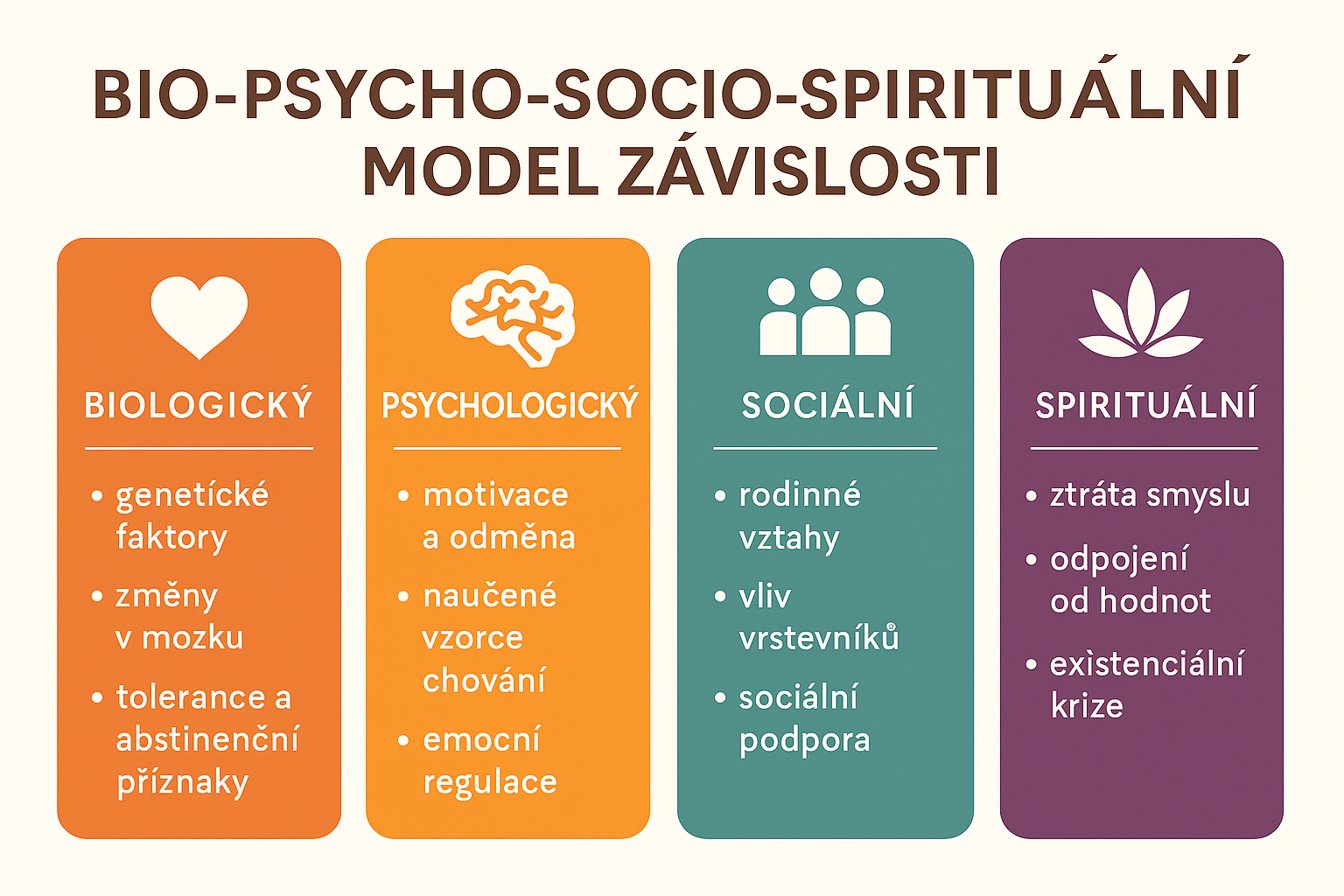
How addiction arises: the bio-psycho-socio-spiritual model

Addiction is not just a matter of weak will or one bad decision, and it is not just the result of a single cause, but a complex set of interconnected factors. The modern view of addiction therefore uses the so-called bio-psycho-socio-spiritual model, which includes four basic pillars: biological, psychological, social and spiritual. This model helps to better understand why addiction arises, how it can be effectively treated and how to prevent its return.

Biological Pillar (Body)

  • Genetics and heredity: Some people are genetically at higher risk of developing addiction.
  • Physical changes in the brain: Substance use affects brain circuits and chemistry, leading to physical dependence.
  • Health condition: Chronic illness, pain, or other physical ailments can increase susceptibility to substance use.
  • Tolerance and withdrawal: The body becomes accustomed to the substance and requires higher doses to achieve the same effect.

Psychological pillar (Mind)

  • Way of thinking and experiencing: Negative thought patterns, anxiety, depression, or low self-esteem can promote the development of addiction.
  • Self-medication: Using substances as an escape from psychological stress, trauma or pain, or as a response to mental illness (anxiety, depression, ADHD).
  • Psychological addiction: The desire for the substance is linked to the need to improve mood or escape reality.
  • Low stress resilience: A lack of stress coping strategies and the associated increased vulnerability can promote loss of control over substance use.

Social Pillar (Relationships)

  • Family and environment: The quality of relationships, family environment, and support play a crucial role in the development and treatment of addiction.
  • Peer pressure: Friends, colleagues, or the community can influence an individual's behavior.
  • Social status and environment: Poverty, social isolation, or lack of support increase the risk of addiction.
  • Sense of Belonging: The desire to belong can lead to substance use.

Spiritual Pillar (Soul)

  • Meaning of life and values: Loss of meaning, inner emptiness, or conflict of values can lead to seeking relief in substance use.
  • Morality and conscience: Feelings of guilt, shame, or internal conflict can maintain addiction.
  • Connection with the environment and spirituality: The search for a higher meaning, faith, or inner strength promotes recovery, hope for healing, and motivation for change.
  • Healing and Forgiveness: The healing process involves forgiving yourself and others and strengthening your inner strength.

How the pillars contribute to the development of addiction

Each pillar represents a separate but interconnected factor. For example, a genetic predisposition may increase risk, but without a supportive social environment and coping strategies, the risk is even greater. Psychological trauma, social isolation, or a loss of meaning in life can lead a person to seek relief in addictive substances.

The Importance of Understanding the Four Pillars in Addiction Treatment

  • Comprehensive approach: Effective addiction treatment requires work on all levels – physical, psychological, social and spiritual.
  • Individualized plan: Each person has a unique combination of risk factors, so it is important to tailor treatment.
  • Relapse prevention: Strengthening all pillars increases the chance of long-term recovery and reduces the risk of returning to addiction.
  • Support and motivation: Involving family, community, and working on personal development help a person find new meaning and motivation.

Each pillar is important and their connection is the key to successful therapy. Effective addiction treatment requires a comprehensive view of the person and their life circumstances.

If you are looking for help or support, do not hesitate to contact our clinic.

Read
6.6.2025

Interview for FocusOn: About alcohol and addictions

An interview was recently published on the FocusOn website, in which I had the opportunity to discuss the issue of alcohol and the use of other addictive substances in Czech society. The topic focused, among other things, on how much beer and wine is still okay and when consumption starts to become risky. In the interview, I explained what the recommended limits are for safe alcohol consumption and why it is important to monitor not only the amount but also the frequency of consumption. At the same time, we also discussed how alcohol affects our health and why it is important to talk openly about these issues.

In addition, we discussed other important topics in the interview:

  • How alcohol affects the brain and why quitting is so difficult - we explained how alcohol changes brain processes and why an addiction develops that is difficult to overcome.
  • Why is it not possible to reduce overall alcohol consumption in the Czech Republic - we discussed the cultural and social factors that maintain a high level of alcohol consumption in the population.
  • How the COVID-19 pandemic has led to an increase in addictions – we analyzed how the period of isolation and stress led to higher consumption of alcohol and other addictive substances.
  • What other substances are currently trending among young people - we also looked at new trends in substance use among the young generation.

You can listen to the entire interview on the FocusOn.cz website.

Read
2.2.2024

Addiction issues in medical practice: e-book

The use of addictive substances, especially legal addictive substances such as alcohol and nicotine, but also illegal addictive substances, is significantly widespread in the Czech population, and problems related to the use of addictive substances can be observed in adults of any age.

A doctor of any specialization regularly meets with patients who are affected by addiction issues to varying degrees in their practice, and thanks to their expertise, they have the opportunity to reveal the possible risk of developing addiction during a conversation with the patient and motivate the patient to solve their problem. Patients who use addictive substances visit primary care and emergency departments more often than patients who do not use addictive substances. The doctor in these facilities is thus an important point in the health and social care system for identifying problems associated with substance use and initiating brief intervention.

In collaboration with other experts, we have therefore prepared an electronic publication on addiction issues for doctors and medical students. The aim of the book is to provide readers with a simple way to detect problematic substance use in patients in routine clinical practice through screening and how to implement a brief intervention for patients at risk.

The e-book can be downloaded under the following link: Addiction issues in medical practice_Malinovská Brož_2024

Read
6.1.2019

How to recognize alcohol addiction in yourself or your loved ones?

The Christmas season can be a stressful time, when we are more affected by problems in our family, personal or professional life or financial problems. During this period, there is often an increase in alcohol consumption, whether due to the greater number of parties at this time or as a momentary escape from the problems that weigh us down. It is not only during this period that it can happen that our drinking starts to "grow over our heads". But how do you know that drinking alcohol is becoming a problem that needs to be addressed? How do you know if you personally or someone close to you is losing control of your drinking and whether it is appropriate to consult a specialist about the problem?

It is important to remember that addiction is a mental illness , the essence of which is changes in the brain that lead to changes in behavior. The current model of addiction looks at addiction from the perspective of biology, psychology, society and spirituality, where all of these components contribute to some extent to the formation and maintenance of addiction. One of the main characteristics of alcohol addiction is an uncontrollable desire for alcohol and the inability to stop drinking once one has started. Such a person seeks out opportunities to drink alcohol or, during regular shopping, will not pass by the alcohol section without buying a bottle. The amount of alcohol that an addict can tolerate in the early stages of addiction increases, and the addict needs to drink more alcohol to achieve the desired effect. In more advanced stages of addiction, the addict needs to drink first thing in the morning to get in shape after excessive drinking the previous day, and after finishing one bottle of alcohol, he thinks about the next opportunity to go to the store to buy another bottle.

As a result of drinking, people begin to neglect normal activities that they used to do, stop completing their tasks on time, do not pay rent, and their interpersonal relationships often suffer (their marriages, long-term relationships break up, they argue with their families). An addicted person becomes upset if someone close to them (friends, family, partner) criticizes them for drinking excessively or recommends that they cut back on their drinking.

Other ways to estimate the level of alcohol problems include these four questions:

  1. Have you ever felt the need to cut down on your drinking?
  2. Do you feel irritated when people around you criticize your drinking?
  3. Have you ever had bad feelings or feelings of guilt because of drinking?
  4. Have you ever had a drink first thing in the morning to calm down or get rid of a hangover?

If a person answers yes to more than one question, it is advisable to consider consulting a specialist.

If you are interested in a consultation in our office, you can make an appointment in the Contacts section.

You can test your alcohol consumption, get a comparison with your peers, and get information about the health impacts of excessive drinking here: http://www.nudz-snasa.cz/

Read